Gemini (Google AI Studio)
Gemini Embeddings convert text into numerical vectors that capture meaning and context, accessible through Google AI Studio. Similar text snippets produce close vectors, enabling tasks like semantic search and classification.
This adapter uses a Google AI Studio API key — the simplest way to use Gemini embeddings. If you need GCP-managed access with service account credentials, use the VertexAI embedding adapter instead.
Getting started with Gemini Embedding
-
Sign in to Google AI Studio using your Google account.
-
From the side navigation menu, choose
API keys. -
Click on
Create API keyin the top right corner.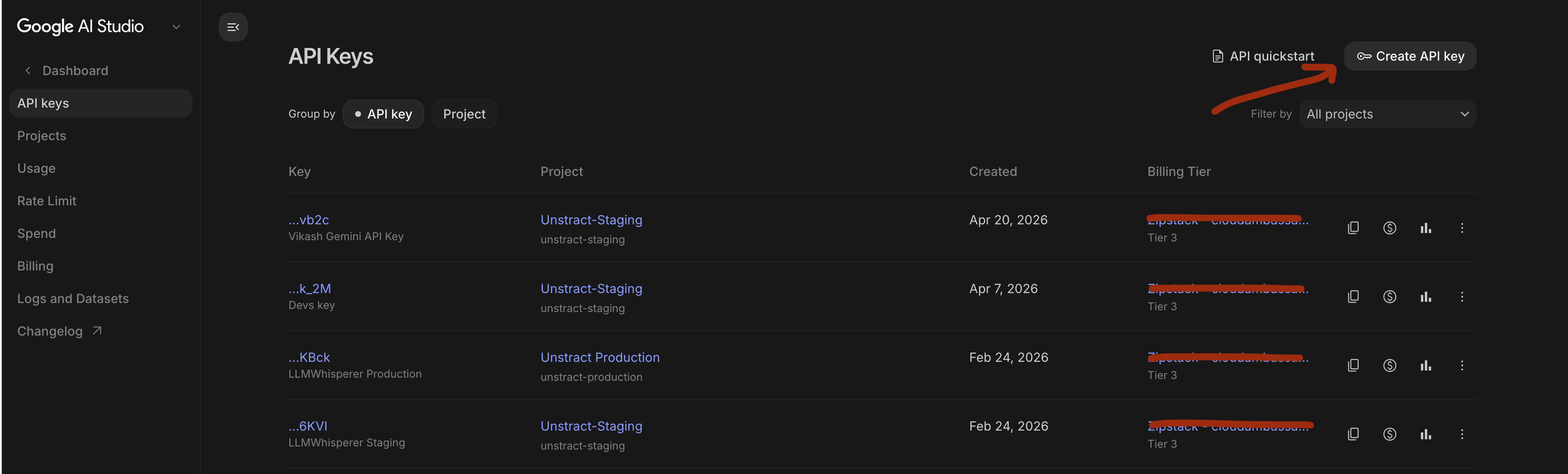
-
Select or create a Google Cloud project for the key, then copy the generated API key and keep it safe.
Setting up the Gemini Embedding model in Unstract
Now that we have an API key from Google AI Studio, we can use it to set up an Embedding profile on the Unstract platform. For this:
-
Sign in to the Unstract Platform
-
From the side navigation menu, choose
Settings🞂Embedding -
Click on the
New Embedding Profilebutton. -
From the list of Embeddings, choose
Gemini. You should see a dialog box where you enter details.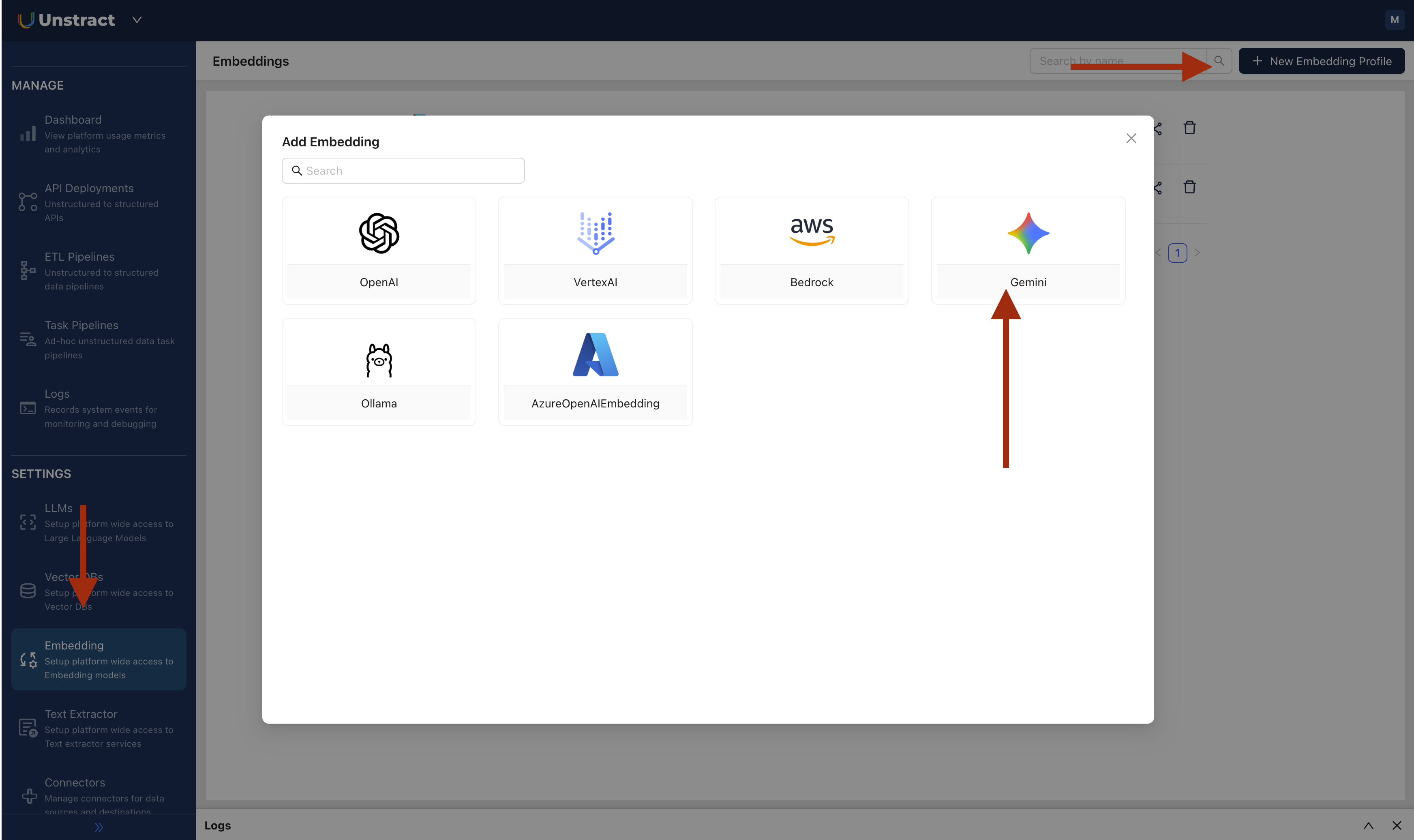
-
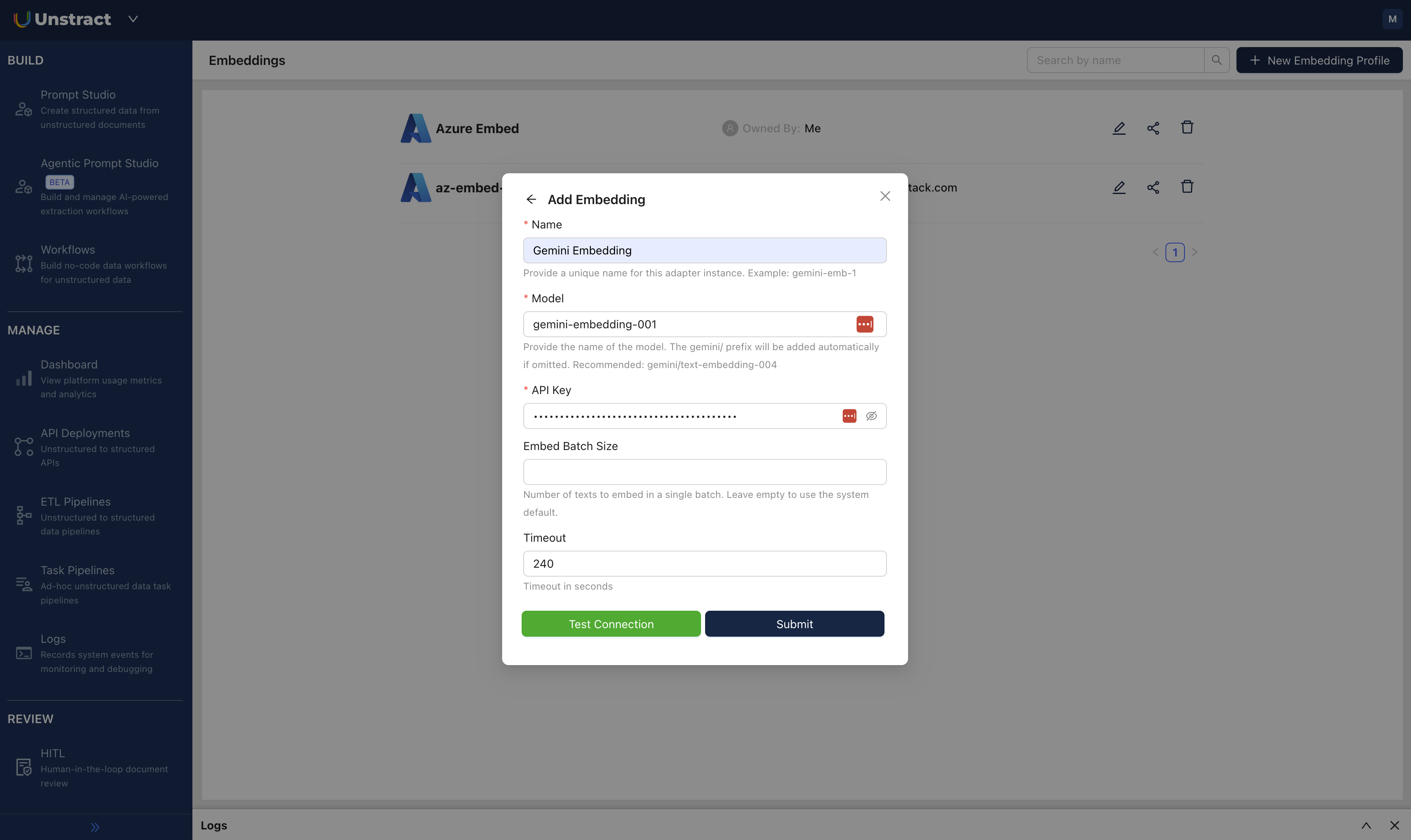
For
Name, enter a unique name for this adapter instance. Example:gemini-emb-1. -
In the
Modelfield, enter the Gemini embedding model name (recommended:gemini-embedding-001). Unstract supports text embeddings only — avoid multimodal models. See Gemini Embedding Models for the current list. -
In the
API Keyfield, paste the API key copied from Google AI Studio. -
Leave
Embed Batch SizeandTimeoutat their default values. -
Leave
Timeout(in seconds) at its default unless you have specific requirements. -
Click on
Test Connectionand ensure it succeeds. You can finally click onSubmitand that should create a new Embedding Profile for use in your Unstract projects.